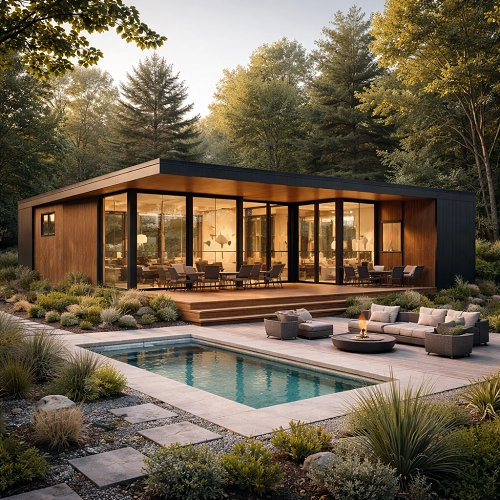
Modern prefab homes (also called modular or prefabricated homes) are residential structures manufactured in factory-controlled environments and transported to the installation site for final assembly. These homes combine advanced construction technology, energy-efficient materials, and modular design to provide cost-effective, sustainable, and customizable housing solutions. Compared with traditional construction, prefab homes are typically 30–50% faster to build and often more cost-efficient due to factory-based manufacturing and reduced waste.
Modern prefab homes are designed to serve multiple residential and commercial purposes. Their modular design allows flexibility in size, layout, and functionality.
Prefab homes are widely used as primary residences due to their affordability, quick installation, and modern design.
Typical residential uses include:
Factory-built components allow homeowners to move into a completed home much faster than traditional construction methods.
Prefab structures can be rapidly deployed for emergency accommodation.
Examples include:
Modular buildings can also serve commercial functions such as:
Some prefab models are designed to be transportable and expandable, making them suitable for mobile lifestyles, campsites, or remote locations.
Modern prefab homes offer numerous advantages compared with traditional construction.
Because modules are built in factories while the site foundation is prepared simultaneously, construction time is significantly reduced.
Benefits include:
Factory environments enable precise manufacturing, ensuring consistent construction quality and fewer structural defects.
Many prefab homes include:
These features can significantly reduce energy consumption and utility costs.
Prefab construction reduces waste and environmental impact because materials are measured and assembled precisely in factory settings.
Modern prefab homes allow customization such as:
Digital design tools such as BIM allow homeowners to visualize and customize their homes before production begins.
Many modular homes are engineered to withstand extreme weather conditions such as:
Specifications vary by manufacturer, but the following table represents common configurations for modern prefab homes.
| Specification | Typical Range |
| Structure Type | Modular / Panelized / Container-based |
| Floor Area | 20 m² – 300 m² |
| Modules | 1–6 modules |
| Floors | 1–3 floors |
| Frame Material | Steel frame / Timber frame |
| Wall Materials | SIP panels, insulated composite panels |
| Roof Type | Flat roof / Gable roof / Sloped roof |
| Insulation | Rock wool, polyurethane foam |
| Windows | Double or triple-glazed glass |
| Power Supply | Grid electricity / Solar system |
| Plumbing | Pre-installed water supply and drainage |
| Installation Time | 1–4 weeks after delivery |
| Lifespan | 30–70 years |
Some expandable prefab homes include integrated electrical wiring, plumbing systems, and interior finishing before shipping to the site.
Before installation, the following steps must be completed:
Prefab homes are transported in modules and assembled on-site.
Installation process:
Assembly can sometimes be completed in just a few days after site preparation.
After installation:
Routine maintenance includes:
Modern prefab homes are widely used across multiple industries.
Modern prefab homes appeal to a wide range of buyers.
People seeking affordable, modern housing solutions.
Developers who want faster project completion and predictable construction costs.
Authorities implementing public housing or disaster relief programs.
Companies requiring temporary or modular office and housing facilities.
Resort developers looking for fast and sustainable accommodation units.
| Feature | Prefab Homes | Traditional Homes |
| Construction Time | 3–4 months | 8–12 months |
| Cost Predictability | High | Medium |
| Environmental Impact | Low | Higher |
| Customization | Flexible | Flexible |
| Waste Generation | Minimal | Significant |
| Energy Efficiency | High | Moderate |
Prefab homes typically provide 12–18% cost savings due to factory production and bulk material purchasing.
Modern prefab homes represent a major innovation in residential construction. By combining factory manufacturing, modular design, and energy-efficient technologies, these homes provide an affordable, sustainable, and highly customizable alternative to traditional housing. With applications ranging from residential living to emergency shelters and commercial spaces, prefab housing is becoming an increasingly popular solution worldwide.